🌲 Vinyl vs Cedar Fencing: What’s Best for Colorado Homes?

Choosing the right fence material is one of the biggest decisions Colorado homeowners make — and the two most popular options are vinyl and cedar. Each performs differently in Colorado’s dry climate, intense sun, and high-wind conditions. This guide breaks down everything you need to know to choose the fence that best fits your home, budget, and long-term durability needs.

⭐ Quick Comparison: Cedar vs Vinyl in Colorado

FeatureCedarVinyl
AppearanceWarm, natural wood lookClean, modern, uniform
Durability in ColoradoExcellent with proper installExcellent, but can get brittle in extreme cold
MaintenanceNeeds staining for max lifespanVirtually zero maintenance
Wind ResistanceVery strong with PostMaster+Strong, but panel-style can catch wind
HOA CompatibilityVery commonMany HOAs prefer or allow vinyl
CostMid-rangeMid-to-high range
Lifespan15–25 years20–30 years
Best ForNatural look, privacy, flexibilityLow maintenance, modern neighborhoods

🌲 Option 1: Cedar Fencing in Colorado

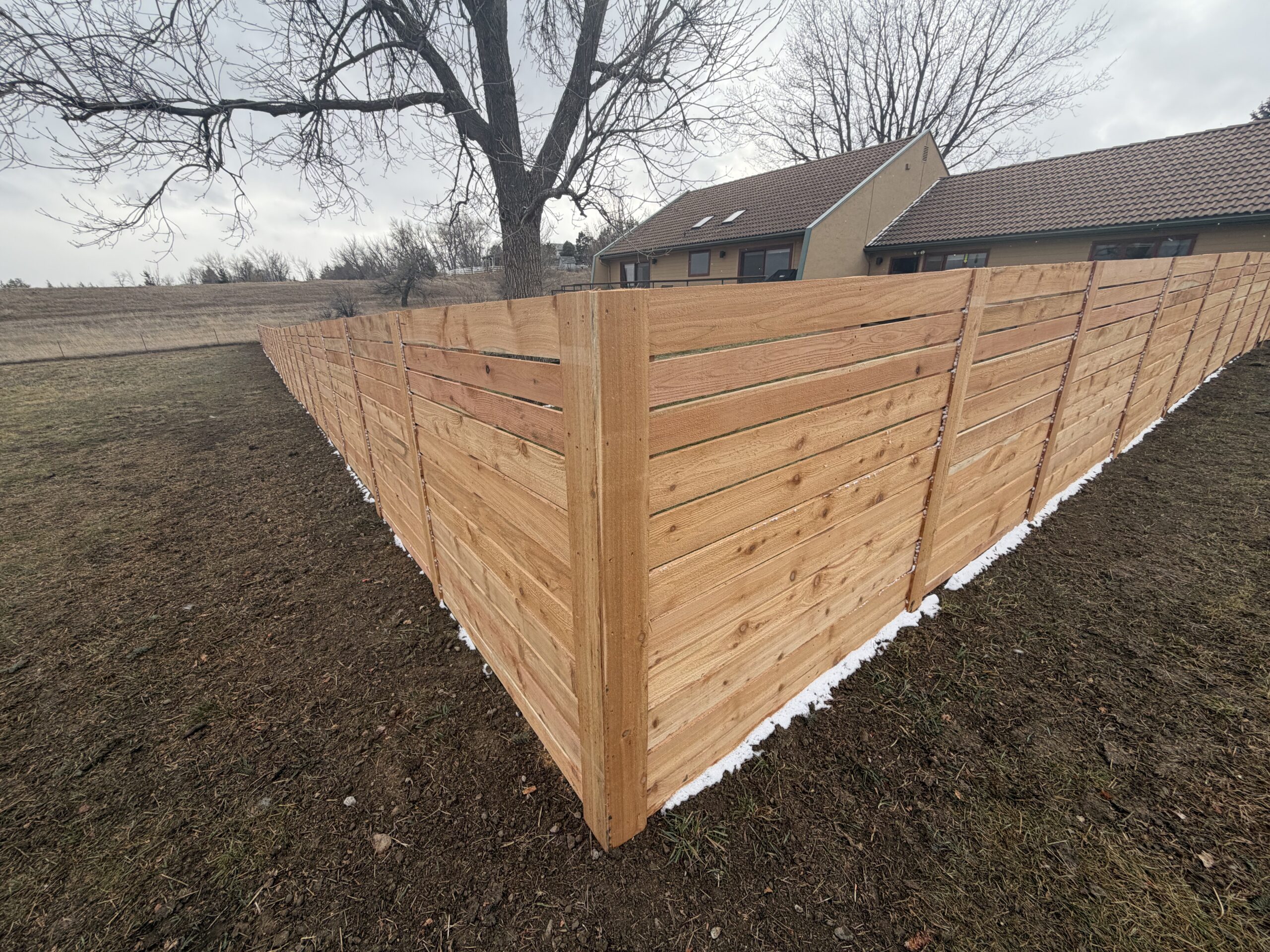
Cedar remains one of the most popular fence materials along the Front Range. It looks warm, blends into natural Colorado landscapes, and performs exceptionally well in dry climates.

⭐ Pros of Cedar Fencing

1. Natural Appearance

Cedar offers a warm, beautiful grain that vinyl can’t quite replicate. It complements Colorado’s mountain and prairie landscapes.

2. Flexible & Wind Resistant

Cedar has natural flexibility, which helps it withstand strong wind gusts. When paired with PostMaster+ steel posts, cedar fences become extremely wind durable — ideal for areas like:

  • Brighton

  • Firestone

  • Henderson

  • Erie

  • Greeley plains

3. Naturally Rot-Resistant

Cedar contains oils that resist rot, mold, and insects better than pine or spruce.

4. Customizable

Cedar can be built in many styles:

  • Standard privacy

  • Board-on-board

  • Cap & trim

  • Horizontal

  • Split rail with welded wire

5. Works Well on Sloped Yards

Because cedar is installed board-by-board, it’s excellent for uneven terrain.

🔻 Cons of Cedar Fencing

1. Requires Maintenance

Staining or sealing every 3–5 years significantly extends lifespan.
(Unless your HOA requires it — staining is optional but recommended.)

2. Color Fades Naturally

Cedar eventually turns a natural silver-gray unless stained.

3. Slightly Shorter Lifespan Than Vinyl

On average: 15–25 years, depending on installation and sun exposure.

⚪ Option 2: Vinyl Fencing in Colorado

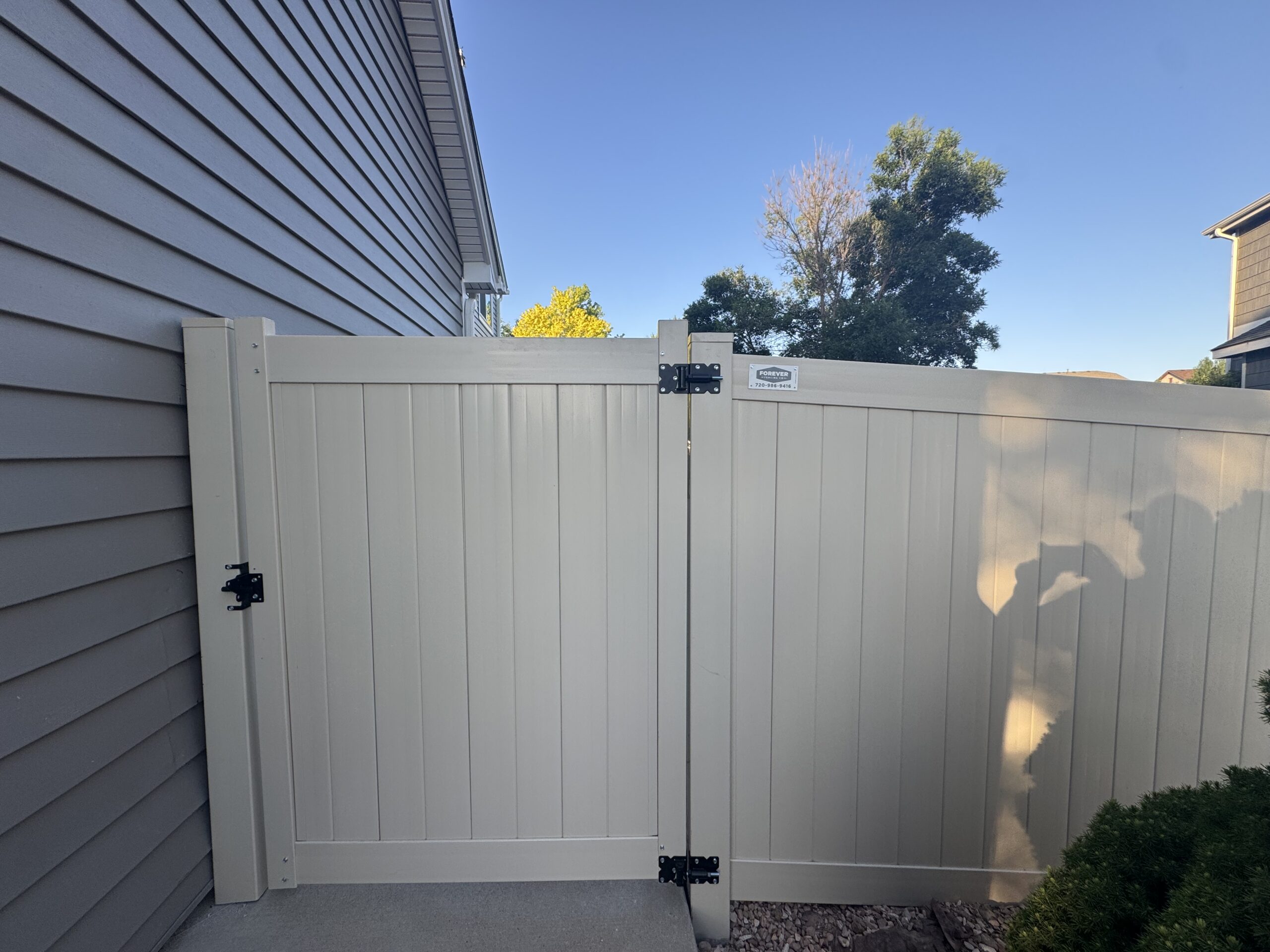
Vinyl fencing has exploded in popularity in newer neighborhoods, especially in areas like Thornton, Commerce City, GVR, Erie, and Broomfield.

Pros of Vinyl Fencing

1. Zero Maintenance

No staining.
No painting.
No sealing.
Just rinse occasionally.

Great for busy families and landlords.

2. Extremely Durable

Vinyl doesn’t rot, warp, or split.
It handles Colorado’s dry climate very well.

3. HOA-Friendly

Many HOAs prefer vinyl for its uniform appearance.

4. Long Lifespan

Vinyl fences last 20–30 years with minimal care.

5. Clean, Modern Look

Perfect for:

  • New construction homes

  • Suburban neighborhoods

  • Properties with modern design

🔻 Cons of Vinyl Fencing

1. Can Become Brittle in Extreme Cold

Colorado’s winter snaps (especially near Windsor, Greeley & Wellington) can stiffen vinyl, making it more vulnerable to impact.

2. Less Color Variety

Usually white, tan, or textured tan (“khaki”).
Cedar offers more natural variation.

3. Panels Catch Wind

Vinyl panels are solid sheets, which can act like a sail in severe wind. Proper installation is critical:

  • Deep post holes

  • Reinforced steel rails

  • ASTM-approved materials

🏔️ Climate Comparison: Cedar vs Vinyl in Colorado

Colorado’s climate is extremely unique. Here’s how each material handles local conditions:

🌬️ Wind Resistance

Cedar

✔ Excellent wind performance, especially with PostMaster+
✔ Individual pickets allow slight airflow
✔ Less surface area for wind to push

Vinyl

✔ Strong when installed correctly
❌ Solid panels catch more wind
❌ Cheaper vinyl can crack or lift

Winner: Cedar (especially with steel posts)


❄️ Cold & Freeze-Thaw Cycles

Cedar

✔ Handles temperature swings naturally
✔ Flexible, less prone to cracking

Vinyl

✔ Generally durable
❌ Can become brittle in sub-zero temps
❌ Impacts may cause cracking

Winner: Cedar, but high-quality vinyl performs strongly too.


🌞 Sun & UV Exposure

Cedar

✔ Naturally UV resistant
❌ Fades without stain

Vinyl

✔ Great UV stability
✔ Color lasts much longer

Winner: Vinyl


💵 Cost Comparison: Cedar vs Vinyl in Colorado

Cedar Fencing

$42–$75 per linear foot
(depends on style: standard vs cap & trim vs board-on-board)

Vinyl Fencing

$55–$95 per linear foot
(depends on style + color + reinforcements)


🏡 Which Fence Is Better for Your Colorado Home?

Choose Cedar if you want:

  • A warm, natural appearance

  • The most wind-resistant fence

  • Custom styles (cap & trim, board-on-board, horizontal)

  • A fence that blends into landscapes

  • Lower upfront cost

Choose Vinyl if you want:

  • Zero maintenance

  • A modern, clean look

  • Longer color retention

  • Great HOA compliance

  • A fence that lasts decades

🔧 Installation Matters More Than Material

The biggest factor in Colorado fence longevity isn’t the material — it’s the installation quality.

Forever Fencing CO uses:

  • Post holes 30 inches deep 

  • PostMaster+ options for maximum wind strength

  • Exterior screws (not nails)

  • Correct rail spacing

  • ASTM-grade vinyl

  • Proper gate reinforcement

A properly installed fence should last 15–30+ years, regardless of material.


FAQ: Cedar vs Vinyl Fencing in Colorado

Is cedar or vinyl more durable in Colorado?

Both are durable, but cedar handles wind better while vinyl handles UV fading better.

Does vinyl crack in Colorado winters?

Low-quality vinyl can. Premium vinyl (which we install) is far more resistant.

Which fence is better for dogs?

Both are great — but cedar allows custom heights and added reinforcement.

Which fence has a better return on investment?

Cedar has higher curb appeal; vinyl offers lower maintenance. Both perform well.

Which fence is required by my HOA?

Many HOAs prefer vinyl. We can help you verify your community guidelines.


Final Recommendation

If you want natural beauty and wind performance, choose cedar.
If you want zero maintenance and long color retention, choose vinyl.

Not sure?
We install both and can walk you through the best option for your home and neighborhood.

Scroll to Top