
How to Build a Fence That Survives Colorado Winds
Lessons from the December 2025 wind storm and what homeowners should know when building fences designed for Colorado weather.
What Is the Best Fence for High Winds in Colorado?
Fences that perform well in Colorado wind conditions typically use durable materials such as cedar with properly installed posts set deep in concrete footings. Correct installation techniques, thoughtful design, and strong materials all play a role in helping fences withstand the powerful wind gusts that occasionally affect the Front Range.
- Deep-set fence posts
- Concrete footings for stability
- High-quality cedar materials
- Proper post spacing
- Installation methods designed for Colorado wind conditions
What Happened During the December 2025 Wind Storm
In December 2025, a powerful wind storm moved across Northern Colorado producing wind gusts exceeding 100 miles per hour in some areas. Across the Front Range, thousands of fences were damaged or destroyed.
Many of the fences that failed were more than twenty years old and had weakened from years of exposure to moisture, sun, and soil contact. However, some newer fences also failed due to improper installation methods or weaker materials.
Storms like this highlight the importance of building fences that are specifically designed for Colorado conditions.
Why Fences Fail During High Winds
When strong winds hit a fence line, the entire structure acts like a sail. If posts are weak, shallow, or deteriorated, the fence can quickly collapse under the pressure.
Common causes of fence failure include:
- Wood posts that have begun to rot below ground level
- Posts installed too shallow in the ground
- Insufficient concrete footings
- Lower grade materials
- Fence sections that create large wind loads
In many cases, a fence may appear fine for years until a major storm exposes these hidden weaknesses.
Why Cedar Performs Well in Colorado
For wood fencing in Colorado, cedar remains one of the best materials available. Cedar naturally contains oils that help resist insects, moisture, and decay.
Colorado’s climate presents unique challenges including intense sun, dry air, and seasonal freeze–thaw cycles. Cedar handles these conditions better than many other types of wood, which is why it remains a popular choice for long-lasting fences.
Proper Post Installation Matters Most
One of the most important factors in building a fence that withstands Colorado wind is proper post installation.
Posts should be installed deep enough to resist both wind loads and seasonal frost movement. Concrete footings help stabilize the posts and prevent shifting over time.
In Colorado, it is also common practice to leave approximately 3–4 inches of soil above the concrete footing. This layer of soil helps insulate the concrete from direct exposure to temperature swings and can reduce stress caused by freeze–thaw cycles.
Why We Bell the Bottom of Fence Post Holes
Another installation technique that improves fence stability is belling the bottom of the post hole. This means the bottom of the concrete footing is wider than the top, creating a larger base that anchors the post more securely in the ground.
A wider base helps resist upward movement caused by frost heave, which occurs when soil freezes, expands, and pushes structures upward.
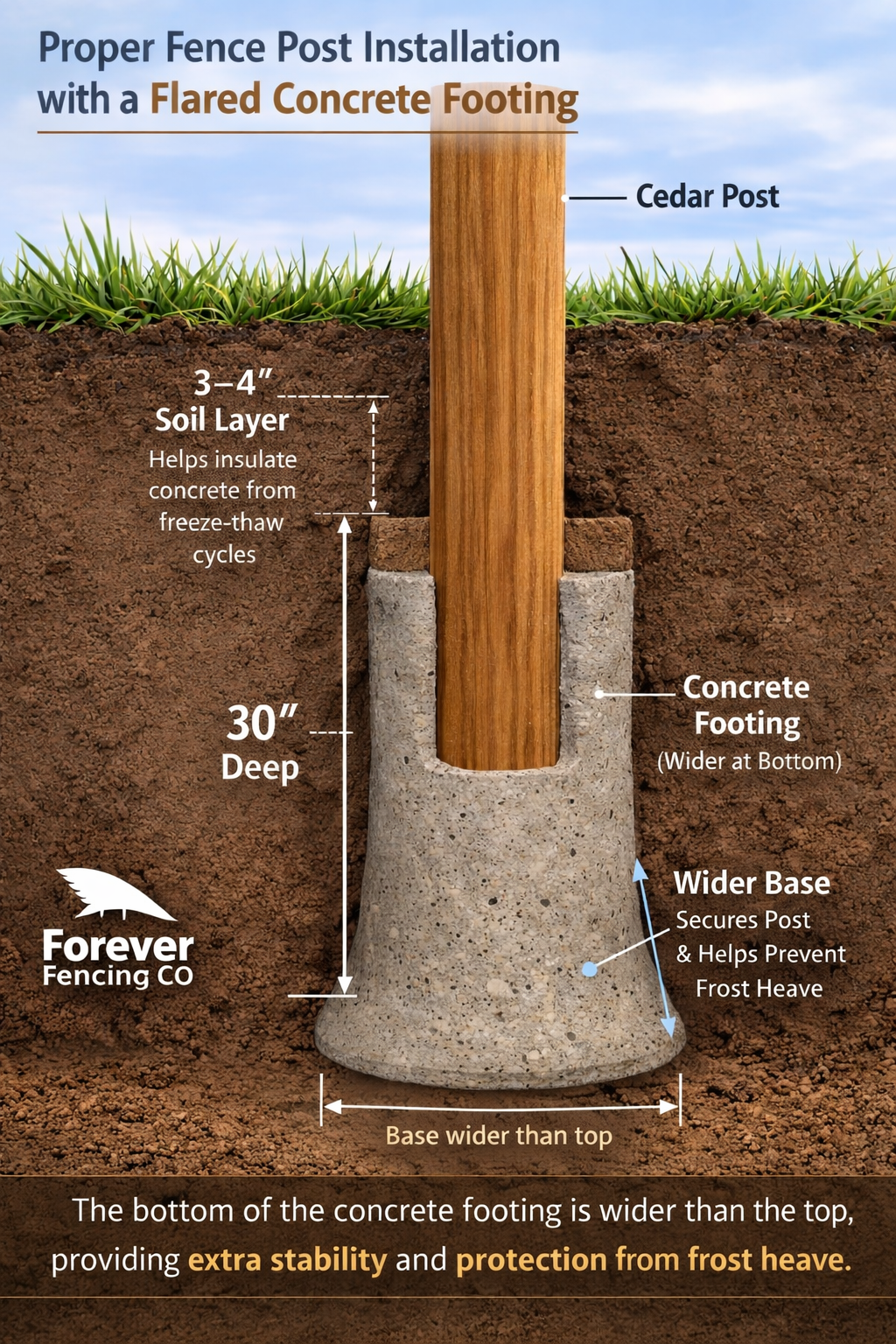
Example of a fence post installed approximately 30 inches deep with a concrete footing that is wider at the bottom to help resist frost heave.
This wider concrete base helps anchor the fence post while improving resistance against frost movement and shifting soil. Combined with proper depth and quality materials, this installation method helps create a stronger fence foundation designed to perform well in Colorado’s climate.
Steel Fence Posts as an Additional Option
Some homeowners choose to install steel fence posts for additional structural strength. Steel posts are resistant to rot and can provide increased durability in certain environments.
Modern installation methods allow steel posts to be incorporated into a wood fence design while remaining hidden from view, maintaining the traditional appearance of a cedar fence.
While many fences built with properly installed cedar posts perform very well, steel posts are another option homeowners may consider for additional reinforcement.
Planning a Fence Built for Colorado
If you are planning a new fence or replacing an older one, building with Colorado weather in mind can make a significant difference in long-term durability.
A well-built fence should not only look good when installed, but continue performing through wind, snow, sun, and seasonal ground movement for many years.