
How Deep Should Fence Posts Be in Colorado?
How deep should fence posts be in Colorado? This is one of the most important questions homeowners can ask before installing a fence. In Colorado, proper post depth is the difference between a fence that lasts for years and one that leans, shifts, or fails after the first major windstorm.
At Forever Fencing CO, we’ve installed fences across the Front Range, and we’ve seen firsthand how improper post depth leads to early fence failure. This guide breaks down the correct depth, why it matters, and what homeowners in Colorado should know before installing a fence.
Quick Answer: Fence Post Depth in Colorado
In most cases, fence posts in Colorado should be set at least 24 to 36 inches deep. However, along the Front Range where wind exposure is common, deeper installation is strongly recommended.
- Standard residential fences: 24–30 inches deep
- High wind areas: 30–36 inches deep
- 6–8 foot privacy fences: 30–36+ inches deep
- Acreage and ranch fencing: varies based on terrain and spacing
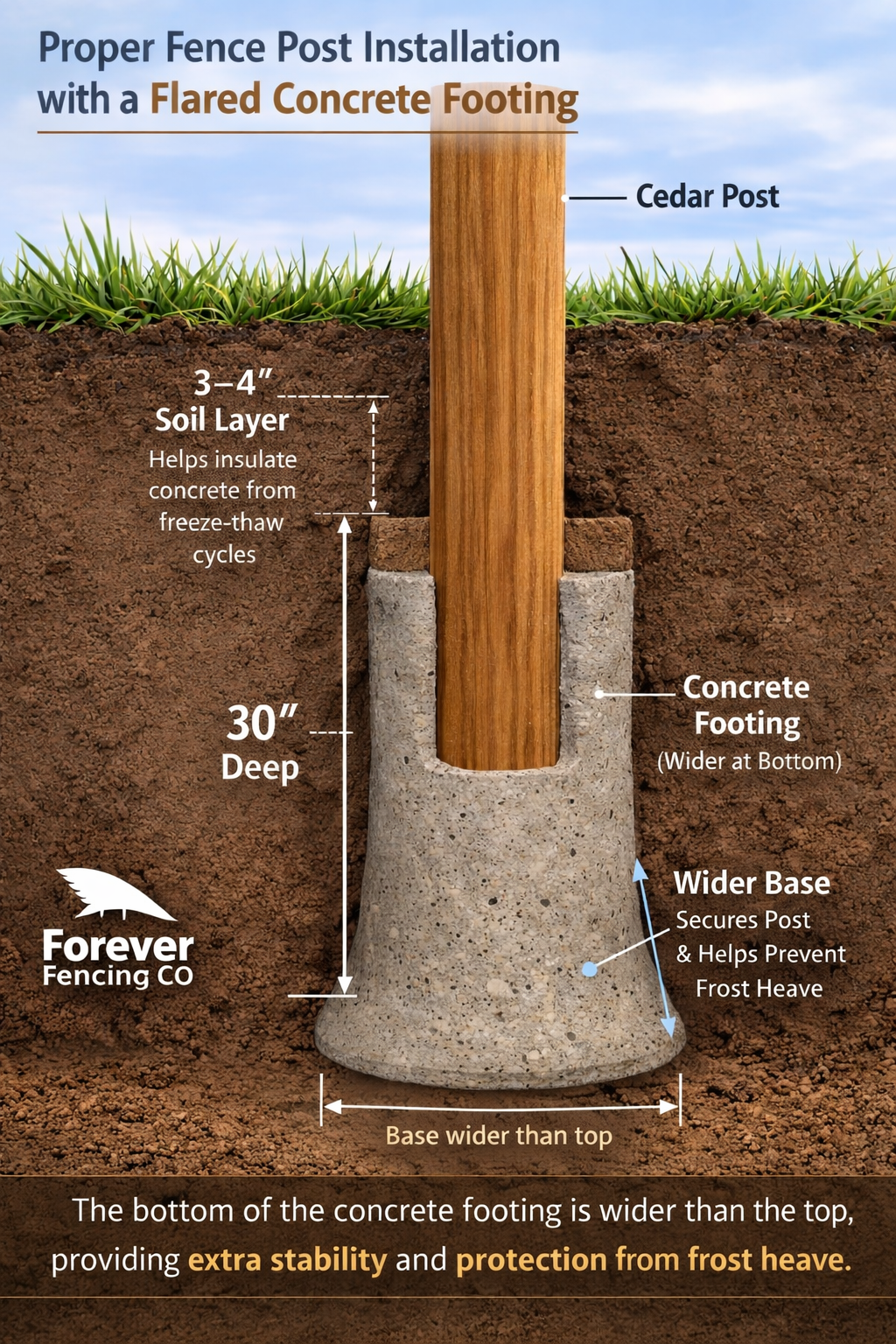
Proper fence post depth is critical in Colorado. Posts should be set deep enough to handle wind, soil movement, and long-term structural load.
Going deeper helps prevent movement, leaning, and long-term failure — especially in Colorado’s unpredictable weather conditions.
Why Fence Post Depth Matters in Colorado
Colorado presents unique challenges when it comes to fence installation. High winds, freeze-thaw cycles, and varying soil conditions all impact how well a fence performs over time.
Wind is one of the biggest factors. A fence acts like a sail, and shallow posts cannot handle the pressure. This leads to leaning fences or posts pulling loose from the ground.
Freeze-thaw cycles are another issue. When moisture freezes and expands, it can push posts upward if they are not installed deep enough. Over time, this causes instability and misalignment.
Soil conditions also vary across the Front Range. Some areas have loose soil, while others have clay or rocky ground. Proper depth ensures stability regardless of soil type.
The Most Common Fence Installation Mistake
The most common mistake we see is fence posts that are not set deep enough. Many fences are installed at 18–24 inches, which may look fine initially but fail over time.
We frequently get called for fence repair where the root cause is shallow post installation. In many cases, the only long-term fix is replacing the posts entirely.
This is why proper installation from the start is critical. It prevents costly repairs and extends the life of your fence.
Fence Post Depth by Fence Type
Different fence types require different post depths depending on height, weight, and wind exposure.
- Cedar privacy fences: 30–36 inches deep
- Ranch rail fencing: 24–30 inches deep
- Welded wire fencing: varies by spacing and use
- 6–8 foot fences: 36+ inches recommended
If you are planning a fence installation in Colorado, post depth should always be adjusted based on your specific property.
How Concrete Installation Affects Post Strength
Depth alone is not enough. How the concrete is installed also plays a major role in post stability.
Posts should be set with concrete below grade and finished slightly below the surface. This helps prevent water from pooling around the post, reducing the risk of rot and long-term damage.
Proper concrete installation combined with correct depth ensures the post remains stable for years.
Front Range Fence Installation Considerations
Across Longmont, Boulder, Erie, and surrounding areas, wind and soil conditions can vary significantly. Installing posts deeper than minimum standards is often the best approach.
At Forever Fencing CO, we build fences with these conditions in mind to ensure long-term performance and durability.
Final Thoughts
So, how deep should fence posts be in Colorado? In most cases, deeper is better. Proper post depth is one of the most important factors in building a fence that lasts.
Cutting corners during installation often leads to early failure, leaning fences, and costly repairs.
Need Help With Fence Installation?
If you’re planning a fence project, contact Forever Fencing CO today. We install fences built for Colorado conditions with proper depth, materials, and layout.
Use our Fence Cost Calculator or reach out for a professional estimate.